
Supreme Court rules Plaquemines coastal lawsuit against Chevron belongs in federal court
27th April 2026 · 0 Comments
By Greg LaRose
Contributing Writer
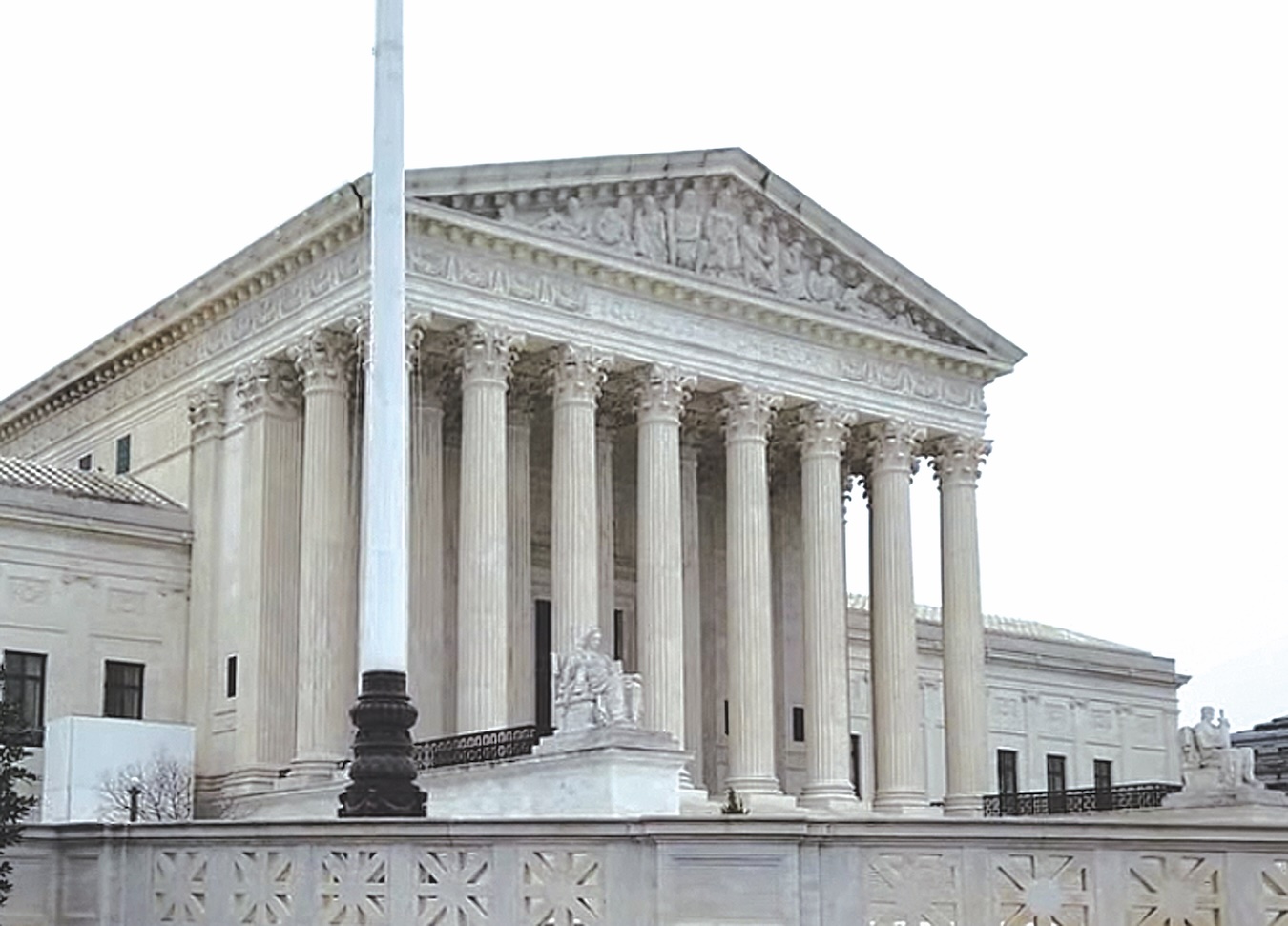
(lailluminator.com) – The U.S. Supreme Court has decided a Plaquemines Parish lawsuit against Chevron over coastal wetlands damage, which resulted in a $745 million judgment for the local government, should be moved from state to federal court, where the company expects a more favorable outcome.
The justices’ 8-0 decision issued Friday, April 17 affects a portion of the more than 40 lawsuits local, parish and state officials have filed against oil and gas businesses. Louisiana officials claim their decades of exploration and pipeline projects have exacerbated the state’s loss of marshes and coastland. The industry has shunned the blame and pointed to their economic impact on the state and its critical role to national security and the economy.
Plaquemines Parish filed lawsuits against dozens of fossil fuel companies in 2013, claiming they had violated state law that, effective in 1980, requires permits for the production work that caused the wetlands damage. It also alleged Chevron had released toxic waste as part of its activities.
Chevron has maintained the lawsuit belongs in federal court, citing a contract its subsidiary Texaco had during World War to provide gasoline for the U.S. military. It cited a law that allows cases to be pulled from state courts that involve a “federal officer.”
Associate Justice Clarence Thomas landed on Chevron’s side in his opinion for the court, ruling as well that Texaco’s military contract primarily involved fuel refining, rather than exploration that was the basis for the state lawsuit .
“We thus decide only whether this suit, which implicates Chevron’s wartime production of crude oil, ‘relat[es] to’ Chevron’s wartime aviation-gasoline refining for the military. We hold that it does,” Thomas wrote.
Associate Justice Ketanji Jackson Brown wrote a concurring opinion, though with different reasoning than Thomas. She said Chevron satisfied the cause-and-effect relationship requirement of the federal officer removal law, showing a connection between its alleged actions and its duties under the military contract.
Plaquemines Parish had prevailed in the U.S. District Court in New Orleans, and the 5th Circuit Court of Appeal declined to rehear the case. Appellate judges also determined the production of oil and gas was “related to” the Texaco contract, meaning the parish had grounds to sue under state law.
The Supreme Court heard arguments in January, with Association Justice Samuel Alito recusing himself because he holds stock in one of the defendants in the case.
“As the Court recognized, the plaintiffs’ claims are related to activities that Chevron and other energy companies performed under federal supervision during World War II,” Chevron spokesman Matias Miranda Vaira said in a statement. “Those claims are flawed as a matter of both state law and federal law, and Chevron looks forward to litigating these cases in federal court, where they belong.”
Some of the oil company defendants in the coastal damages lawsuits have agreed to settlements. Freeport McMoRan reached terms with six coastal parishes in 2022 for a total of $100 million, then BP, Shell and Hillcorp settled with Cameron Parish in late 2023.
Gov. Jeff Landry announced last month a pending agreement with ConocoPhillips that would provide “hundreds of millions of dollars” for coastal restoration in Louisiana.
Although not all coastal parishes filed lawsuits against Big Oil, the cases have had the backing of Landry and Attorney General Liz Murrill, who joined the cases as plaintiffs soon after they took office in January 2024. Their positions came at the risk of political capital in a state where the fossil fuel industry has been long entrenched.
When he shared news about ConocoPhillips in March, Landry said he would work to convince all 12 parishes suing the company to sign the settlement. It would leave Chevron and ExxonMobil as the only two major oil companies to not reach terms.
The governor told reporters during an economic development visit Friday to Belle Chasse that fossil fuel companies are entitled to choose if they want to continue litigation against parishes in federal court.
“I wish we could find a resolution,” Landry said. “I’m working hard to try to get a resolution.”
Reached through her spokesman Friday, Murrill remained optimistic that the state would prevail in its case against Chevron. She and state Solicitor General Benjamin Aguiñaga went to Washington, D.C., in January to argue alongside Plaquemines Parish before justices.
“A jury in one of the most conservative, pro-oil communities in the country found that Chevron was liable for billions of gallons of toxic waste dumped into the Louisiana marsh,” Murrill said in a statement through her spokesman. “It doesn’t matter whether this case is in state court or federal court – I am confident the outcome will be the same.”
Attorney John Carmouche, a close ally of Landry and Murrill, has led the effort among coastal parishes to pursue payouts from oil and gas companies. In an email, he said the Chevron ruling applies to 11 of the 42 lawsuits.
“These 11 cases require decisions by a federal court and we intend to pursue this avenue as aggressively as we will pursue the other cases in state court,” Carmouche wrote. “Simply changing where the case will be heard, as has happened, will not deter our efforts to have Big Oil held accountable for the damages they caused and the enormous restoration they owe the people of Louisiana.”
The Supreme Court opinion did not cover the merits of the state case that ended with the $745 million judgment, though it’s expected that issue will arise when the lawsuit returns to federal district court.
This article originally published in the April 27, 2026 print edition of The Louisiana Weekly newspaper.